The story of my life
I was 9 when AWS told me I was too young.
This is what I did about it, and how it took me from a website for my dad to building AI for blind and low-vision people.
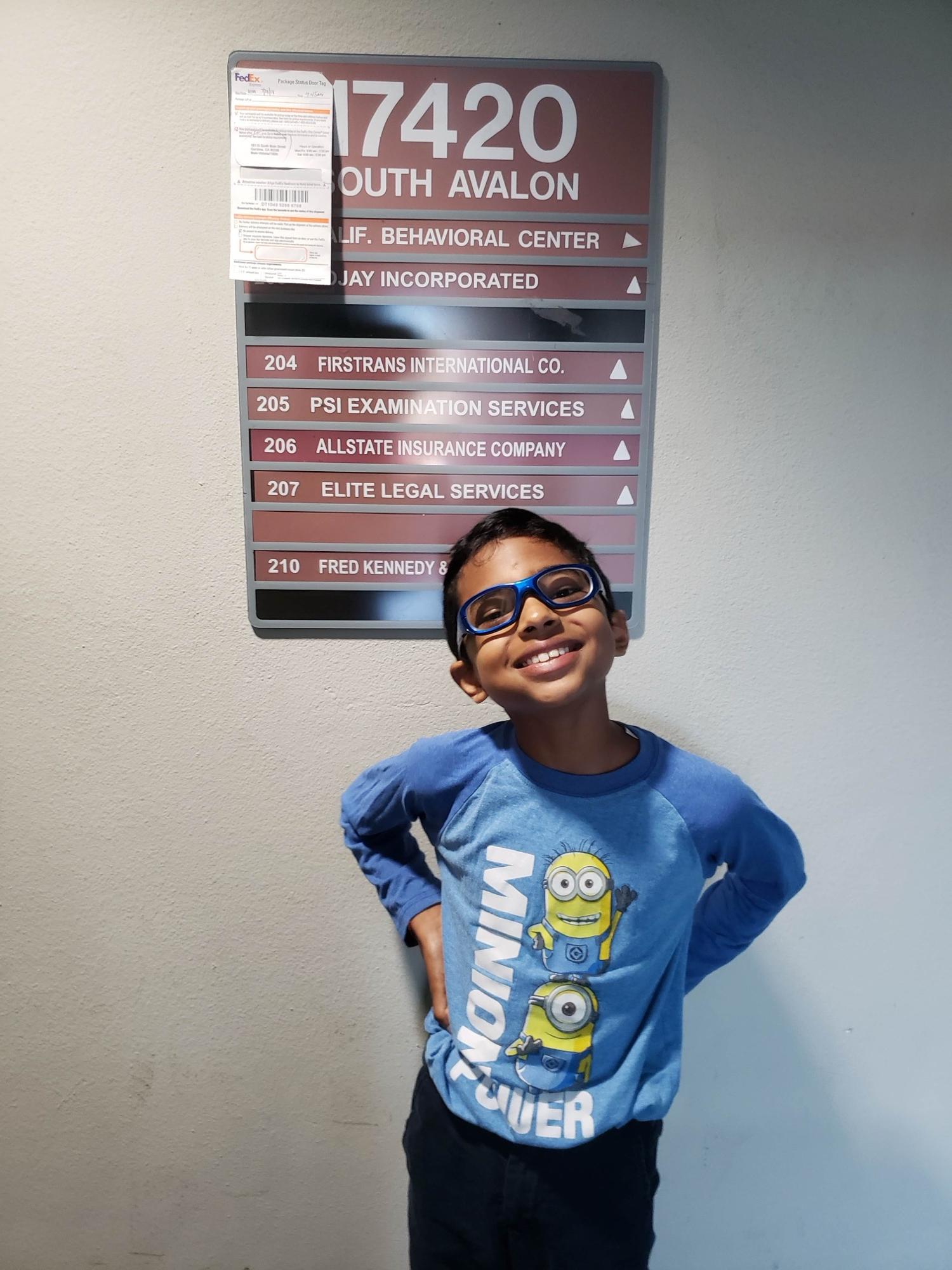
Age 8
It started as a surprise for my dad
When my dad passed his AWS certification, I wanted to do something bigger than just saying congratulations. So I pulled up GeeksforGeeks, taught myself HTML and CSS, added some JavaScript, and surprised him with a website celebrating his pass.
He couldn't believe it. Looking at what I'd built, he asked whether I wanted to try cloud computing myself. I didn't just want to try it—I wanted the certification too. I promised him right then that I'd study every single day for a year, even if on the busiest days it was only for five minutes.
Age 9
Turned away at the door
A year later, we drove to the testing center with my notes in hand. When we walked in, the proctor didn't even look at me—she assumed my dad was the one taking the exam.
“Sorry sir, we don't babysit.”
My dad told her the baby was the one taking the test, and she'd be the one sitting him. It didn't help. AWS only allowed candidates 18 and older, so after 365 straight days of studying, we were turned away in the lobby without me ever touching a keyboard.
I could have waited nine years. Instead, my dad and I sat down that evening and emailed Andy Jassy, then the CEO of AWS. We didn't expect someone running a company that size to read an email from a 9-year-old, let alone reply.
He replied. The age limit was about liability, he explained, but AWS would make an exception for me. Following that conversation, AWS updated its policy and dropped the age limit from its certification exams altogether.
July 30, 2018
"Great, Dad, I know I passed"
On July 30, 2018, I finally got to sit in front of the testing monitor in Carson, California. When the door opened and I walked back out to the waiting room, my dad looked up anxiously to ask how it went. I told him I already knew.
The result reached us an hour later over lunch at the Carl's Jr. next door, when his phone buzzed with the score report. I'd passed. At 9, I was the youngest person in the world to earn an AWS certification.
2018 to 2019
If you never ask, the answer is always no
That winter, Andy Jassy invited my family to re:Invent, AWS's biggest conference. When he came over to talk on the expo floor, I knew I had one shot to take a leap. I looked up and asked him for a summer internship.
“Karthick, if you never ask, the answer will always be no.”
That sentence became my operating principle.
The next summer, at 10, I worked with the AWS Robotics team, helping test and program their TurtleBot robots. That June I also stood on the keynote stage at the AWS Public Sector Summit in Washington, D.C., speaking to an auditorium of enterprise leaders, and NBC4 Washington covered the story. I told the reporter I was working toward building a robot dog—mostly because my mom wouldn't let me have a real one.
2020 to 2021
"So what's next?"
Right after my exam results came in, my dad asked me a simple question: "So what's next?"
My answer: if a 9-year-old could pass a test plenty of adults struggle with, every kid deserved a shot at learning this. In 2020, as school went remote, I started Kids Cloud Club over Zoom, teaching cloud computing to kids across the country and in India. To reach more students, I trained friends to teach sessions, and in 2021 we organized KidCon, our own cloud conference for kids.
Yet one live class at a time could only reach so many students. That ceiling is what first pushed me toward AI: an intelligent tutor that could adapt to each student and reach far more people than I ever could on my own.
Setu Labs, 2024
Turning a club into a company
In 9th grade I built my first AI app, TeenTalk, an AI listener for teens. In 2024, I turned what I'd learned from Kids Cloud Club into a company, Setu Labs, to give students the kind of personalized guidance that used to require a private human tutor.
We started with KTutor, an AI tutor that adapts to how each student learns. I designed the AI system, filed two provisional patent applications as named inventor, and led five high school interns who helped build and test it.
Later that summer at Leangap, execution hit a real wall. Our freelance developer fell a week behind on Infotruster, our Chrome extension, and Demo Day was less than a week away with no time left to prove traction. Instead of giving up on sales, I got the team rewriting our messaging and reaching out directly to friends and on social media. By Demo Day we had 10 paying customers. I gave our pitch to the judges, and we won Most Outstanding Company.
It was an early lesson in startup reality: when plan A breaks, drop the excuses, rally the team, and find plan B before the clock runs out.
Lucky, 2024 to now
When someone in my family lost their vision
While building AI tools, a personal crisis changed everything. A close family member began losing their vision. The reality hit me one afternoon when I watched them struggle through their email: their screen reader kept stumbling over formatting, and they finally had to ask someone else in the room to read private messages to them. Nobody should need another person to read their own email.
I started looking at what screen readers actually do. They read every tag and line number in the same flat, robotic voice. Scanned or untagged PDFs often don't read at all, and there is no way to pause and ask a clarifying question about what you just heard.
I pivoted Setu Labs to fix this. I built Lucky, a voice-first digital guide dog, named after the real dog my parents finally let me get. You hold Space and talk naturally: it navigates Gmail by voice, reconstructs PDFs in the right reading order, and searches the web with cited sources.
I took an early build to a Foundation Fighting Blindness chapter meeting and demoed it for about 300 blind and low-vision users. I asked for direct, unvarnished feedback, and they didn't hold back. They cared about latency, natural cadence, and being able to adjust reading speed instantly. Today, we build Lucky directly with their chapters.
At VISIONS 2026, our first national conference booth, I expected questions about technical features.
“People asked about cost instead.”
We had priced Lucky at $20 a month, like most software. But talking to dozens of visitors made the economic reality sink in: many visually impaired people live on fixed incomes and rely on state vocational rehabilitation agencies or assistive grants for their tools. Lucky worked, but our distribution model was completely disconnected from the people who needed it most.
Now
The problem I haven't solved yet
This journey started with an eight-year-old building a website for his dad and refusing to walk away from a closed door. Today, the mission is much bigger: ensuring blind and low-vision people have equal, dignified access to the digital world.
That takes more than a product that works. I want to take Lucky from conference booth demos to daily use, expanding pilots across Foundation Fighting Blindness chapters and figuring out how to reach people who can't pay $20 a month through state programs and grants. Solving that distribution challenge, and learning how to build an enduring company around it, is what comes next.